Pick the base before the room
Where to Stay in Santiago After the Camino
Choose Old Town for the emotional finish, station/Ensanche for a fixed departure, and the quieter edge only when rest and recovery matter more than sleeping beside the Cathedral. If this is your first night after walking in, start with how you want the first hour to feel, not with hotel filters.
Plan the next step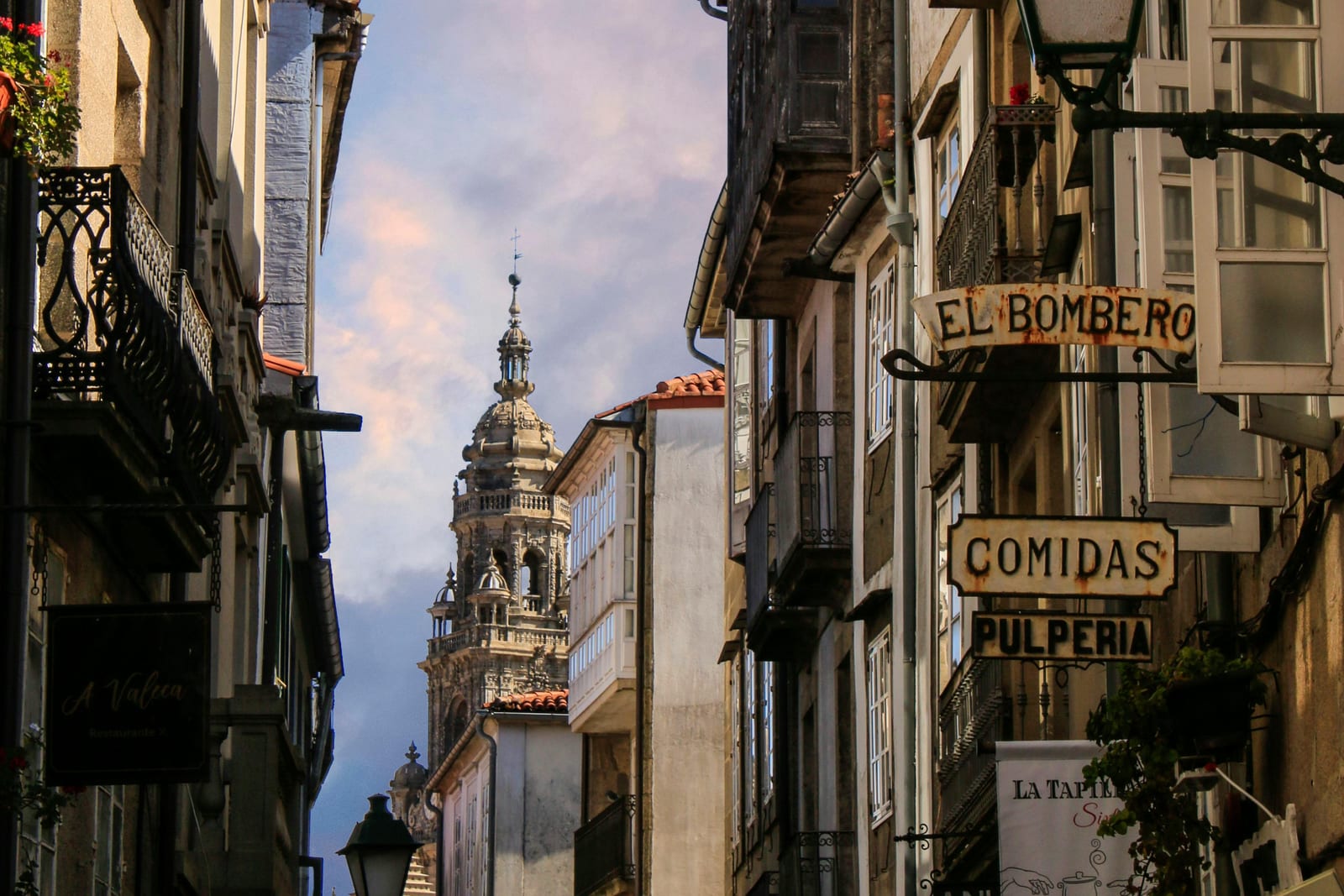
Decision answer
Quick answer
It is the strongest focused answer when the stay should remain tied to the Cathedral square.
First moves
What to do first
Use the first hour as the test: where do the bag, the Cathedral, and the next departure need you to be?
- 1Decide what the room is solving
Name the real problem before comparing hotels: Cathedral feeling, morning departure, or physical recovery.
- 2Make the first-hour map
Picture the first hour after arrival: bag drop, Cathedral, office, shower, or transport. The area should make that hour easier.
- 3Protect the second move
Plan the Pilgrim Office, luggage pickup, train, bus, or airport step separately so the hotel does not create a new problem.
Before you commit
What matters most
- Old Town is the right first answer when you want to drop the backpack, see the Cathedral again, and keep dinner within a short old-town walk.
- The station and Ensanche area become stronger when the next morning matters more than the last evening.
- A quiet-edge hotel is not a default first-night pick; it earns its place when you have two nights and genuinely need recovery, parking, or calm.
Compare your options
Tradeoffs
Old Town vs station area
Old Town gives the clearest arrival feeling. The station area gives easier movement for rail, bus, and early departures.
Use when Cathedral proximity, evening wandering, and the finish moment matter most.
Use when bags, train, bus, or onward timing should stay simple.
Tie breaker: If you would regret not sleeping near the Cathedral, choose Old Town.
Historic center vs quiet recovery
A Cathedral-area stay keeps the trip emotionally centered. A quiet-edge stay is better when rest is the real goal.
Use when dinner, Cathedral, and old-town walking should be effortless.
Use when spa, sleep, parking, or a slower reset matters more.
Tie breaker: If you are physically spent and have two nights, quiet recovery deserves a real look.
Itinerary fit
Trip plans
Stay close to the finish
Use the room to protect the first hour: check in or store bags, walk light to the Cathedral area, then keep dinner close.
- Use Hotel Praza Quintana or the Parador when the room should keep you inside the Cathedral frame.
- Use Hotel Gelmirez when the morning train, bus, or airport move is the only part that cannot slip.
- Avoid a quiet-edge stay for a single night unless sleep and recovery matter more than walking back out into Santiago.
Separate arrival from recovery
Let the first evening stay simple, then use the second day for market time, a slower meal, or real rest.
- San Francisco Hotel Monumento keeps the old-town setting with a calmer hotel atmosphere.
- A Quinta da Auga works when the second day is about your body recovering, not adding more streets.
- Set the Pilgrim Office and Cathedral sequence before you compare room style or spa value.
Real trip cases
What if...
If the backpack is suddenly too much
Do not drag it around while deciding. Use the station area, a hotel drop, or a storage plan before judging whether Old Town feels practical.
If the Cathedral moment is the point
Choose an old-town stay and solve transport separately; otherwise the most important hour of the trip becomes a logistics problem.
Weather fallback
Rain makes base choice more important because unnecessary crossings between station, office, hotel, and old town feel heavier.
- Old Town still works if the hotel is close enough to absorb a slow first evening.
- Station-area lodging gets stronger when the next departure is fixed.
Local decision notes
Common mistakes to avoid
Mistake: treating Old Town as only a romantic choice
Old Town is emotional, but it is also practical when the Cathedral, Pilgrim Office, dinner, and short walks are the real itinerary.
- For most one-night pilgrims, Old Town reduces the number of decisions after the final walk.
- It becomes weaker when the bag is heavy, the access plan is unclear, or the next departure is fixed early.
Planning note: Keep old-town hotels when Cathedral proximity is the point; call out luggage and access friction before recommending them.
Mistake: using one practical answer for every practical traveler
Station/Ensanche and quiet-edge hotels are not the same choice: one solves movement, the other solves recovery.
- Hotel Gelmirez supports train, bus, and departure logic when movement is the constraint.
- A Quinta da Auga makes sense only when recovery is valuable enough to leave the old-town frame.
Planning note: Keep station logic for real departure pressure; keep quiet-edge logic for real recovery, not generic comfort.
Places
Useful places
Parador Hostal dos Reis Catolicos
It is the clearest lodging signal beside the Cathedral square.
Travelers who want the stay to remain attached to Obradoiro.Compact old-town hotelHotel Praza Quintana
It keeps the choice of where to stay close to Cathedral and evening-walk logic.
Pilgrims who want to sleep inside the old-town rhythm.Station-area practical baseHotel Gelmirez
It represents the practical counterweight to old-town stays.
Travelers with fixed onward train, bus, or airport timing.Old-town-edge historic staySan Francisco Hotel Monumento
It broadens the old-town set beyond Obradoiro and Quintana.
Travelers who want Cathedral proximity with a calmer hotel atmosphere.Quiet recovery stayA Quinta da Auga
It makes the quiet-edge tradeoff concrete.
Two-night travelers prioritizing rest, spa time, or parking.Arrival anchorSantiago de Compostela Cathedral
It defines the emotional center of the stay.
Any choice of where to stay where the finish moment matters.Compare live stays across Santiago
After choosing Old Town, station/Ensanche, or a quieter recovery base, compare live availability for your actual arrival and departure dates.
This is a partner hotel map from Stay22, not an official Camino or hotel booking desk. If you book through it, Compostela Guide may earn a commission at no extra cost to you. Confirm the property, access with luggage, room, final price, taxes, and cancellation terms before booking.
Tourist questions
Fast answers
Should most pilgrims stay in the old town after finishing?
For one night, usually yes if the goal is Cathedral time, a shower, and a simple first evening. Use the station area when the next departure is the hard constraint.
Is a quiet-edge hotel a good first night after the Camino?
It can be, but it is strongest for two-night recovery stays. For a single night, it often costs too much old-town time unless rest is the whole point.